The Original Man of Steel
The Great DC Sightsee

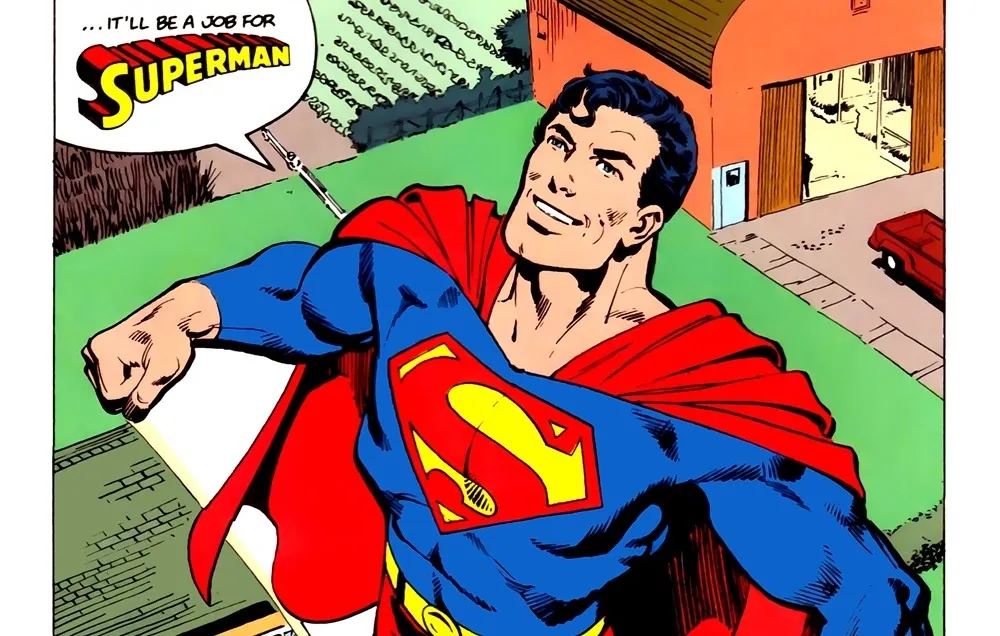
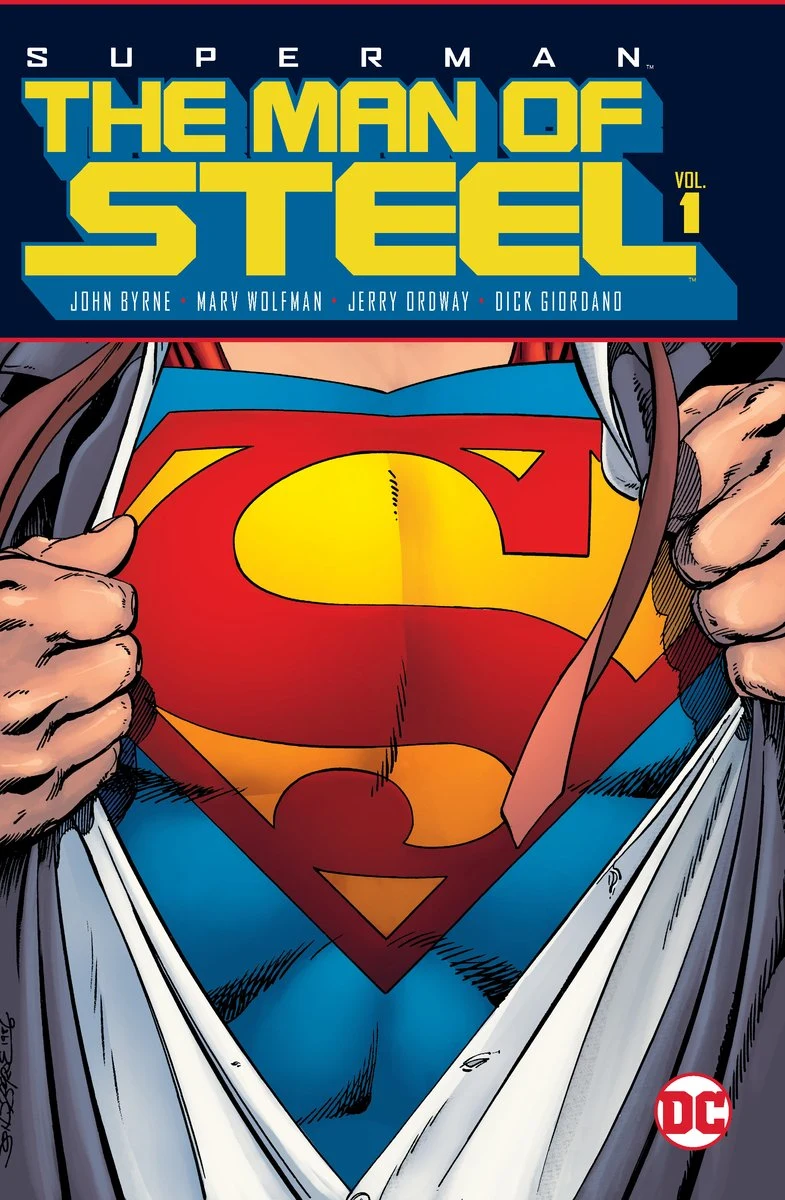
One of modern pop culture’s largest icons, Superman is better known as a composite of his appearances than for any single specific depiction of the hero. Similar to his peers, Batman and Spider-Man, the typical fan may approach The Man of Steel from comics, movies, television, or basically any other artistic avenue, without any single one being integral over another. Anyone could point out that Superman originated in comic books, but the number of fans today who have read one of the thousands of issues featuring the character almost certainly does not compare with the number of fans of the screen. In 1986, Superman writer-artist John Byrne was well aware of the hero’s unique position in public consciousness. In the foreword to the six-issue miniseries that would see Superman rebooted after the DC universe was reset in Crisis on Infinite Earths, Byrne mentions television shows and radio dramas as popular gateways outside of comics into the character’s world. The Man of Steel accepts the challenge of synthesizing the multimedia hero back into comic book form, while also serving as an introduction to Superman and the DC universe in which he exists.
It’s interesting to see that in ‘86, there was already little interest in spending too much time rehashing the Superman origin story. In a single introductory issue, readers receive all the background information on the character, and the foundations for the status quo going forward are set. With a prologue, two chapters, and an epilogue, the first issue alone establishes Krypton and its fall, the childhood of Clark Kent, and the creation of his superhero alter ego. Many of Superman’s staple supporting cast, including Clark’s parents and ace reporter Lois Lane, are already slotting into their expected roles before the second issue. The remaining five entries are mostly disconnected stories that touch on events that are integral as setup for the series’ assumed character dynamics, such as Clark and Lois, as well as Lex and Superman.
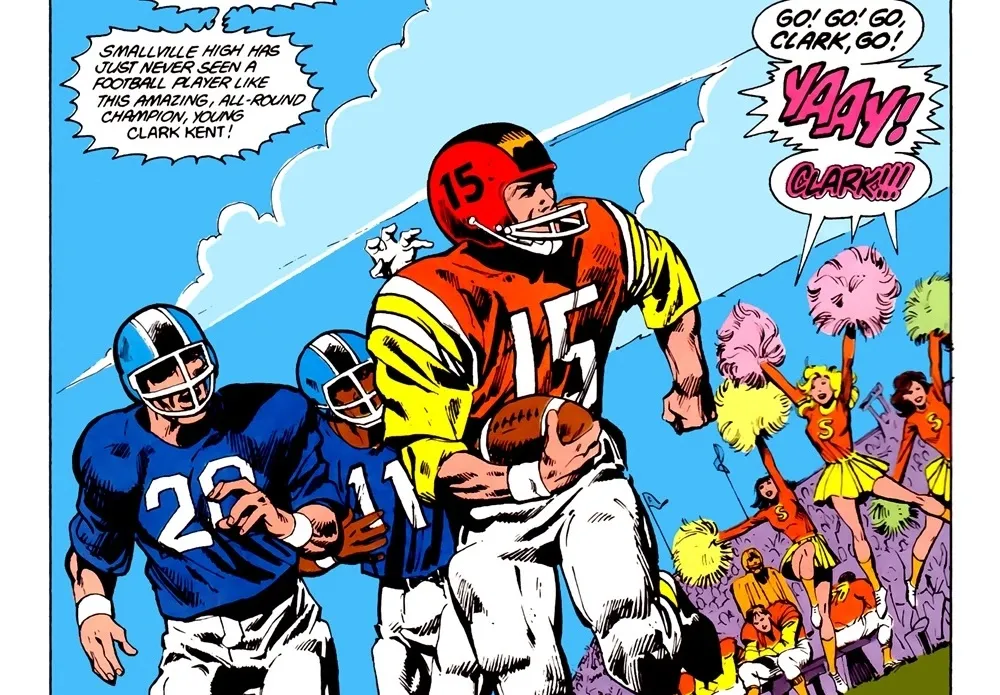
From his arrival on Earth in a rocket to his battle with an evil clone of himself in Metropolis, the book is charming and all-around quite familiar. While the story feels true to the character, and the selected sequences intentionally build the hero’s broader personality, there is a disconnect between what is actually playing out on the page and what the event represents. This gap in coherence results in a level of shallowness in the plot. Take one of the first stories, in which Clark Kent has the truth of his arrival on Earth revealed to him by his Pa. After watching his son dominate in football, Jonathan Kent decides it is time to tell the boy about the crashed alien spaceship where he was found as a baby. Pa Kent sees his son’s supernatural abilities as an unfair advantage that should not be used against others who cannot compete. The chapter is cute and showcases a vulnerable father imparting news and wisdom to his son, neither of whom finds it easy. While a quaint and straightforward message, the issue loses itself and reveals that Clark, of course, already knew about his powers, and the only aspect of himself that had not been revealed was the actual crashed spacecraft. The reader is left puzzled, asking why would the alien with super strength and flying abilities be less legitimate than a farm boy from Kansas who was given the same gifts from God or genetics or a serum or whatever. There’s a certain amount of intention behind the odd behavior, with the book choosing to highlight Superman's alien origins over other aspects to explore the hero’s relationship to his adopted planet. In these issues, his being an alien seems to linger on Superman in a way that even being all-powerful does not, and his skewed absolutism towards Krypton does actually end as one of the hero’s more interesting perspectives amongst a sea of platitudes and virtuosity.
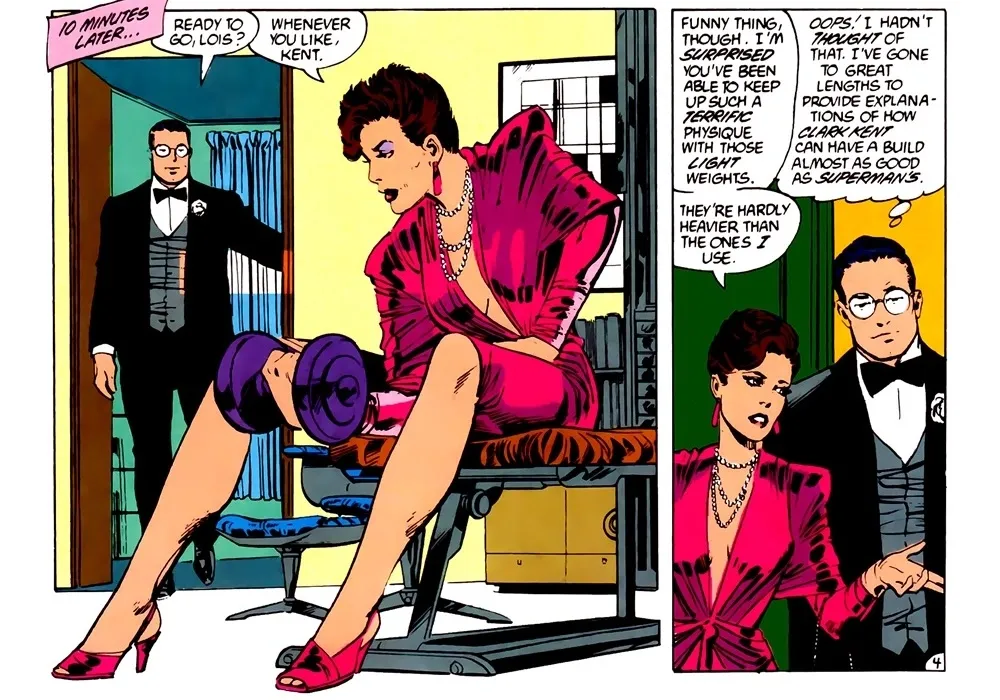
While Superman is the protagonist in these pages, the hero is so flat and consistent that he works better as a mirror for more interesting and flawed characters. The mystery and uncertainty of Superman adds so much to the ambitions of Lois Lane and the machinations of Lex Luthor, but the included irony only works since the reader is in on the background and motivations of the titular superhero. Readers can relate to Luthor, since if the all-powerful superhero were any other person, the businessman's skepticism would be more than fair, but since Superman is good-intentioned and well known to the reader, the villain’s expected downfall gains a bit of tragedy. For Lane, the romance and deception become a light-hearted fantasy rather than an existential horror of being admired by an omnipotent being, since Superman’s naivety and genuine emotions are understood by the audience.
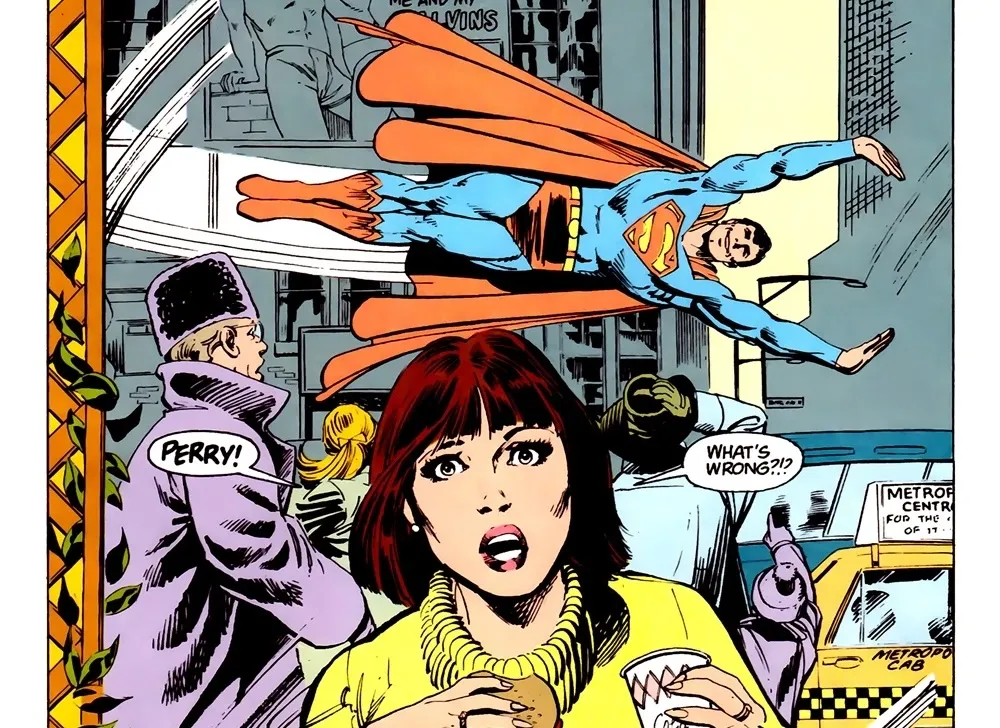
Over the six issues, readers see Superman save someone from jumping from a ledge, fight a clone, and publicly expose Lex Luthor, amongst other foundational events from the hero’s history. The stories are fun and a bit silly, but almost none of them carry any weight or have any particular hook. Dialogue fills any empty space, with every character having the same dull, straightforward voice, spending too much time describing and explaining their current actions and surroundings as though they are not plain to see. Outside of a few shining personalities, such as Lane and Luthor, the characters, including Superman, have a shared voice that renders them a bit generic. There are only so many declarations of what the panel already portrays before readers may start to feel as though they are being directly spoken to. The saving grace, much like the aforementioned irony, is that Superman is one of the only heroes where the verbose statements and explanations can come off charming and in character. Superman stands out as the best mouthpiece for the shared voice, which helps the book get by.
The middle four issues of The Man of Steel will not present too much of a surprise for most readers who have any prior knowledge of Superman, or even superhero conventions in general. Clark Kent balances his day job with his caped activities, hiding his identity while building a new life in Metropolis and working at The Daily Planet. There are lots of explanations of powers, one-upping of Lex Luthor, and flirting with Lois Lane. The art mimics the story in being bright, simple, and effective, while never breaking the mold and, at times, mastering it. When thinking of classic Superman, this style is a faithful depiction of the spirit of all that came before, and has been the model for the hero going forward in most media.
With a return to Smallville, the final issue of the bunch ends up being the most compelling, and does the most to intrigue readers for the continuing series. Two main stories take up the bulk of the pages, one being that of Lana Lang, Clark’s high school sweetheart, and the other being of a final message from Jor-El, Superman’s Kryptonian father. The stories from this trip back home are a bit unique in that they focus on some of Clark’s fallibility and give him a more complicated path forward at their conclusion. Lang’s sequence focuses on a flashback to when Clark left Smallville after revealing his identity and abandoning the girl who had been expecting a proposal from him. From Clark’s perspective, revealing his powers is a vulnerable act he also expects will be invigorating for his close friend. While Lang offers profuse justifications for Clark, which feel interjected and seem to reflect a fear of casting legitimate shortcomings on the title character, the truth is that Clark’s act is callous in its lack of consideration. Lang is broken after comprehending that god-like beings exist, one had loved her, and then had left her for being just a human, not enough, despite that being all she had ever been told she needed to be. It is a nice, messy story beat, and though it is brief, the interaction with his childhood friend rattles Superman enough to send him to check out the crashed spacecraft that had brought him to the planet and started the book on the outset.
To complete the full-circle send-off, Superman ends the book back where he started and has a final interaction with the technological ghost of his father. Brief and chaotic, the meeting between biological father and son is interrupted by the most effective emotional sequence in the comic. Pa Kent sees his child as writhing in pain at the hands of some glowing ghoul, and despite knowing that there’s almost nothing that could stand against Clark that Pa would have a shred of a chance at opposing, the old farmer runs in and swings his shovel to save his son. The result, apparently, is that all of Jor-El’s knowledge of Krypton, its history, and its culture, is transferred to Superman, and the Kryptonian’s spirit is dispersed. Without reading further, it is unclear whether this last-minute inclusion is just a throwaway idea, but as a reader, it is intriguing to know that Superman could be going to move forward with such a large new perspective. In addition, the takeaway the hero draws from his newfound wisdom is baffling and seems to provide good grounds for a continuing story.
After being given all the knowledge of his grand alien homeworld, including that of its philosophers and scientists, Superman concludes that none of it matters and that it is all useless information that will die with him. He frames this supposed tragedy as being an unfortunate step to him adopting America and the Earth, and Superman sees his new home as all that matters. The immediate repression of all the imparted memories and knowledge is, on one hand, foolish, as there are certainly insights from the Kryptonian culture that could improve Earth, but Superman’s decision to protect himself from the associated emotions is also very human, as is his determination to look and move forward above all else. The messiness and chaos of the final issue are a breath of fresh air from the generic, though enjoyable, affair that makes up the bulk of the book. As an introduction to Superman and his world, The Man of Steel delivers all one would expect, though as a satisfying read in its own right and as a draw into the ongoing series, the book hits its stride too late.
Citation Station
The Man of Steel. 1986. John Byrne (writer, artist), Dick Giordano (inker), Tom Zuiko (colorist), John Costanza (letterer).