Princess Leia and the Untold Stories of a Galaxy Far, Far Away
Star Wars

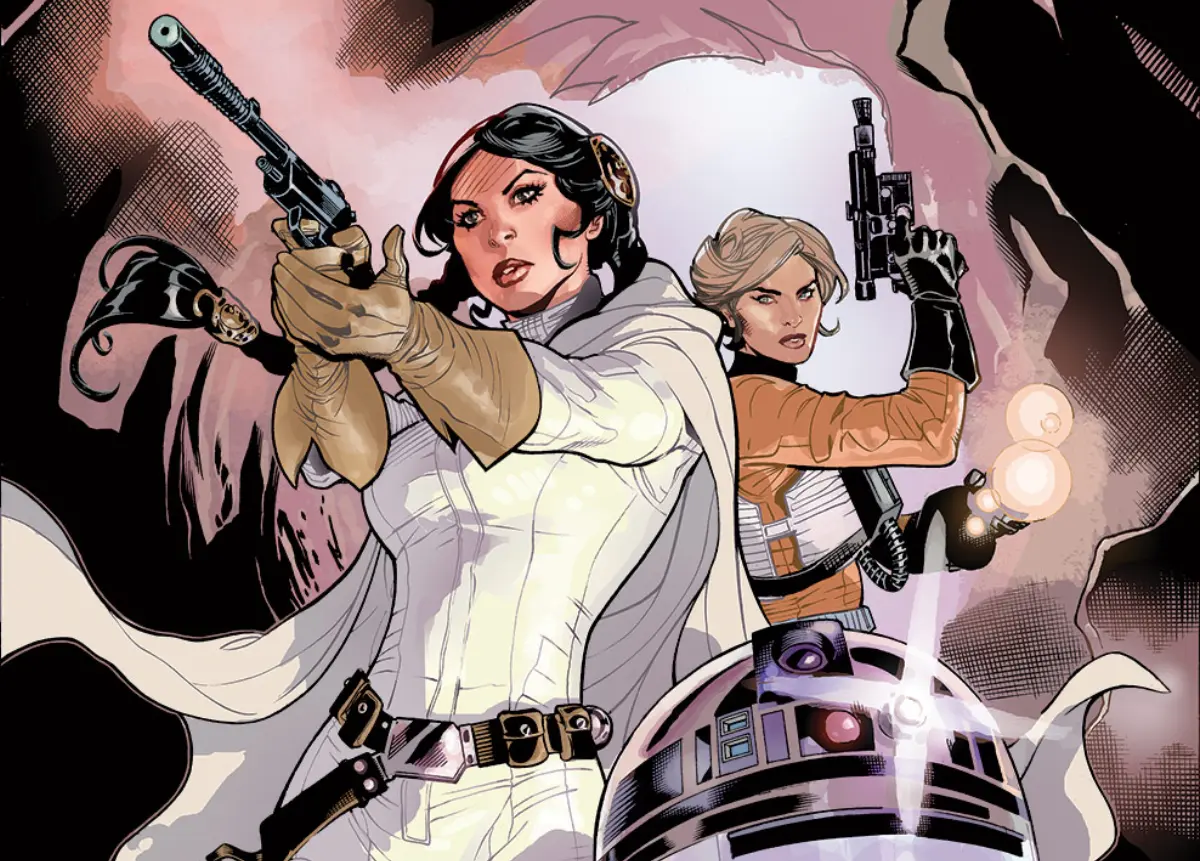
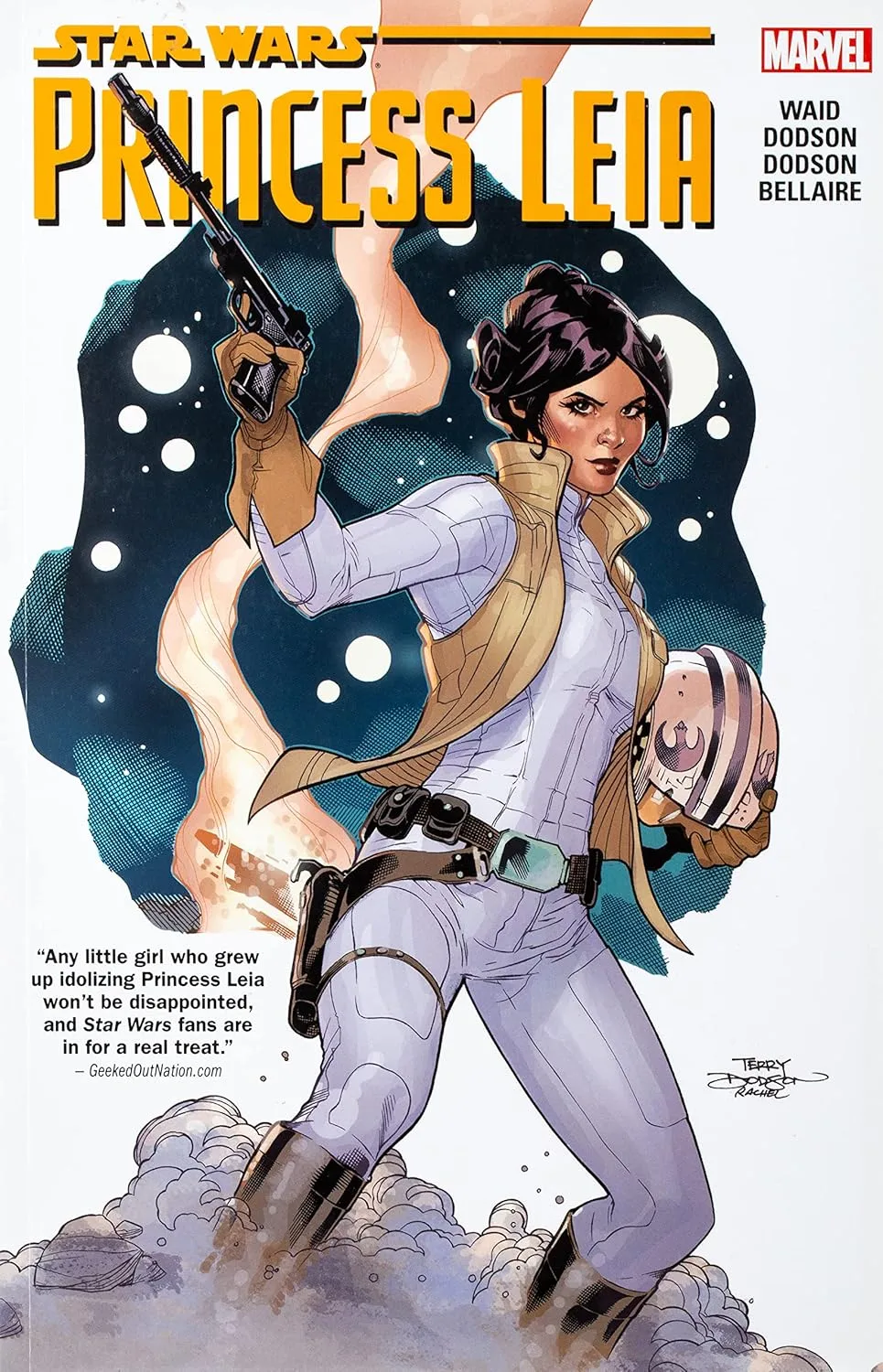
Alongside their tentpole Star Wars comic book series, Disney launched a variety of solo and side titles when it acquired the franchise in 2015. Princess Leia from the team of Mark Waid, Terry Dodson, Rachel Dodson, Joe Caramagna, and Joordie Bellaire was one of the new books set to prop up the burgeoning expanded universe. Confined to five issues, this series focused on the leading lady of Star Wars and flew under the radar compared to at least one of its peers, the lauded hit that was Larroca and Gillen’s contemporary Darth Vader series. Personally, I had never heard of the Leia series until I came across eight copies of the first issue at an antique store, with no other Star Wars comics in sight. It seems strange on its face, as Princess Leia is one of the characters with the most storytelling opportunities left in the franchise, and the creative team behind the book is star-studded. So, as both a matter of curiosity and the next stop on our trip through Star Wars comics, I dove into the Princess Leia limited series to see where all the fuss might have been.
Arguably, Leia Organa is the character from a galaxy far, far away that has the most untapped potential. Suffering from a lack of real planned origins or destination, Leia existed in a similar situation to Han and Luke after the release of Star Wars. While George Lucas always had grand plans for the series, it is clear he and everyone else were taken off guard by the sheer love and gravity of the characters themselves. Despite his best efforts, the universe that Lucas built would never be defined by politics or grand military strategy; instead, it would be personalities and individual style that would become the series' staples.
In the original Star Wars, it is clear that the film does not present Leia as Luke's sister, nor does it establish Han as the clear love interest for the princess. In the subsequent film, The Empire Strikes Back, Leia’s romance with the smuggler is in full swing, but she has yet to be written as the sister of Luke and the child of Vader. The timeline here is important because it shows how the on-the-fly nature of the original trilogy failed one of its main characters. Leia’s story becomes more dramatic and drastic than her peers', without the proper time and exploration dedicated to her narrative.
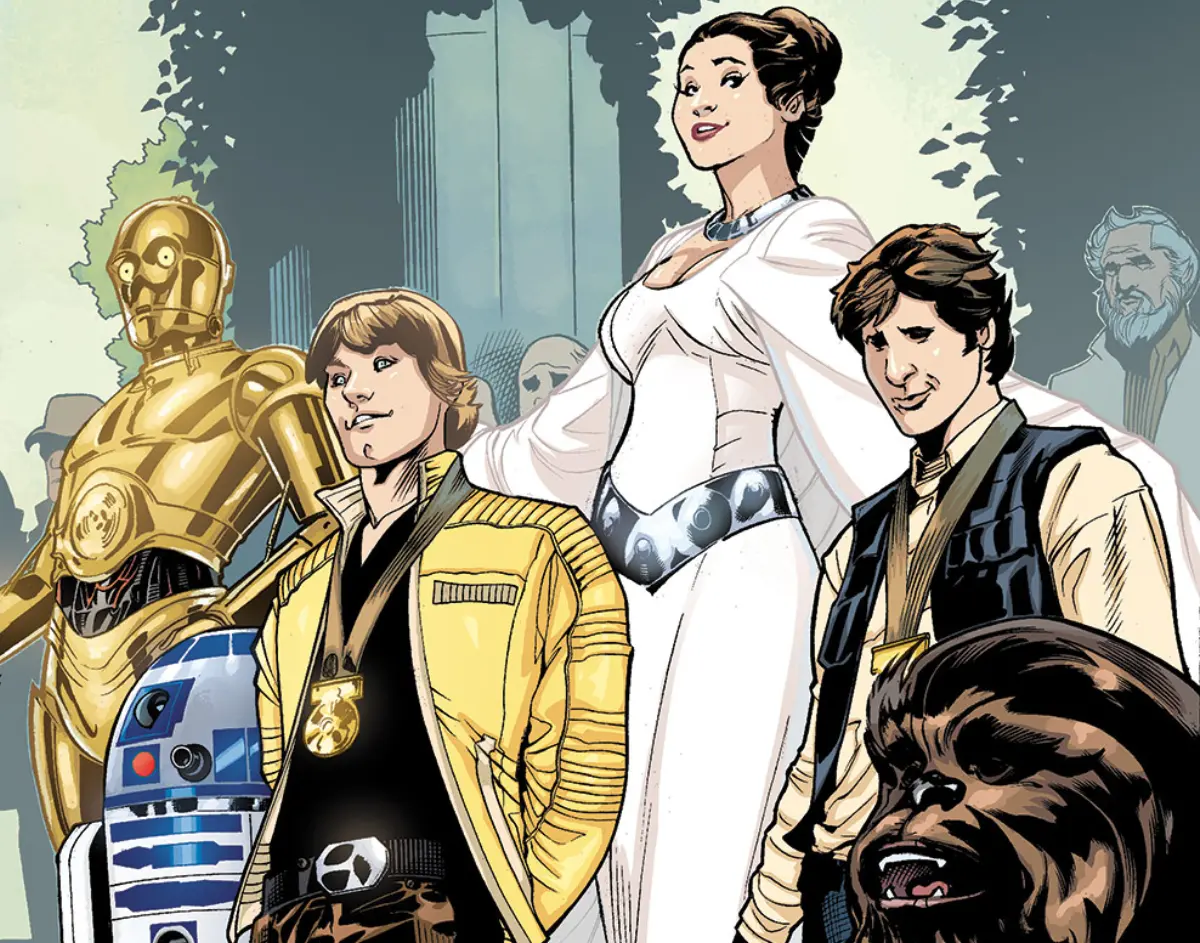
Star Wars is built around the tale of Luke Skywalker. An orphan who lives as a farmer with his aunt and uncle out in the middle of nowhere becomes the magical hero of the galaxy and its latest revolution. Sparked by the tragedy of his adopted parents’ murder by the despotic space government, Luke’s quest becomes even more personal as he learns that his long-thought-dead father is in fact the leader of the evil empire that he is standing against. Leia’s origin serves almost as a foil, with her being raised by a more privileged, established family on Alderaan, where she was royalty. From her throne, she is brought low and experiences the ultimate tragedy as a consequence of her defiance of the Empire, with her planet destroyed. The failure of her arc is that it clearly was designed to see her meet the lowly farmer in the middle and fly away together into the stars as a happy couple. When the chemistry of Carrie Fisher and Harrison Ford became evident, they pivoted her storyline into twin sister of Luke, and the change undercuts her overall journey, while bringing down some others alongside it. Leia’s understanding of the galaxy and the ways she is perceived and treated by Vader specifically make little sense in the context of her being his daughter.
Just on the surface, the sith lord would be shocked at the mere sight of the child of his one true love, but there is no indication that Vader sees his lost wife in the face of his daughter. Also, Leia has some understanding of the Jedi and knows to reach out to Obi-Wan in a moment of need, in contrast to Luke’s widespread ignorance. However, as the child of the most force-sensitive man in the universe, it becomes nonsensical for her to be unaware of her own power, especially when the prequel films make sure it is understood that force powers are genetic and measurable. If everything from the series is accepted, Leia’s story overshadows Luke’s and becomes oddly unsatisfying. It is only when the viewer sort of blocks out the information from previous entries and buys into romance that her arc becomes natural and believable. To boil it down, her existence as the top rebel leader is incongruous with the narrative logic baked into Luke being a hidden-away nobody, and without a lot of additional context, Leia’s story downstream from that mismatch is a bit awkward and off compared to that of her peers.
All this brings us to the 2015 comic series, simply titled Princess Leia. Waid and the Dodsons are taking on this tangled knot of a character and pulling on a few key strings to alleviate some of the mess. As with most of its contemporary series, the book takes place in the direct aftermath of the original Star Wars film. The setting choice allows for the series to deal with the immediate consequences of the events with which audiences are familiar. In this case, the destruction of Alderaan, a pivotal plot point in the series, but an emotional moment that ultimately goes underplayed for Leia, is the centerpiece of the book.
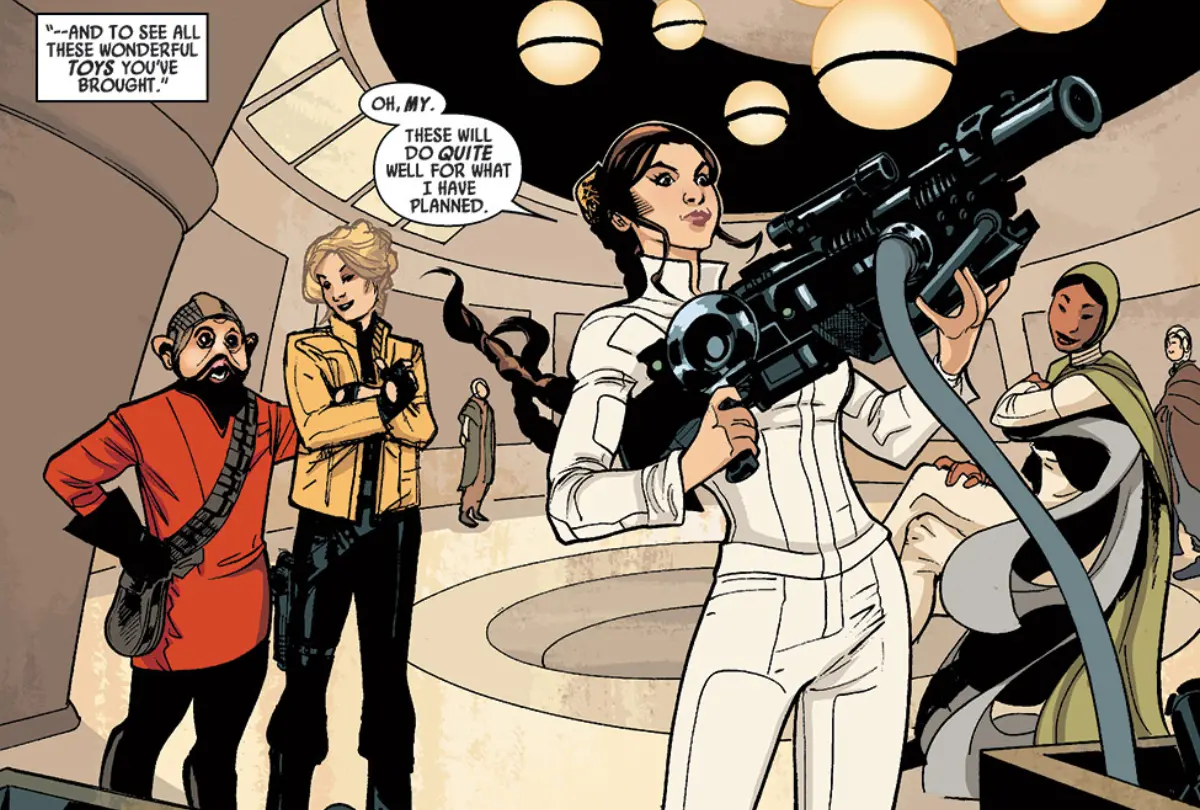
There are a few brief scenes at the start of the comic to summarily dismiss the main cast members like Han and Luke, with each offering a few words of wisdom upon their departure from the book. Furthermore, there is the slightest setup of a framework for the rebellion’s political structure, but such as with the big characters outside of Leia, the series takes no big swing at altering or establishing major elements of the original film. The strategy of trying to fully play within its own space is one Princess Leia employs time and again, much to its benefit. By filling out its own original cast and building up its own little corner of the galaxy, the book is really able to project a unique voice. The Darth Vader comic of the time by Kieron Gillen achieves similar success in establishing an identity, and both can be contrasted with the central, weaker Star Warsseries.
Princess Leia is a book about the past and future of the people of Alderaan and their culture. As the destruction of an entire planet is one of the darker elements of the Star Wars saga, there is not much exploration in the films into the consequences of the Empire’s atrocity, aside from the obvious galvanization of the rebellion under the leadership of the princess of the lost civilization. While Leia dedicates her life to breaking the Empire’s grasp on the galaxy, the audience does not hear much about the world she lost, despite the fact such a massively traumatic incident would usually impact someone in tune with the force such as Leia, to a really harsh degree. If the destruction of their home were to occur any other time in the franchise’s story to any other force-sensitive character, there would have been a major force-related response. As a character, Leia set the bar and became a template for those created after her, but in the process she was failed by her franchise. To be clear, the book is not some grim journey through a woman’s grief, but the underlying tragedy is instead used as a counterweight for the witty, light-hearted tone of the series.
The most prominent and promising new character presented in the series is Evaan Verlainem. An Alderaanian rebel who survived the destruction of the planet, Evaan is determined to keep the culture and royal structure of their broken people known. Introduced at first as a reluctant ally and critic of Leia, Evaan’s loyalty to her planet quickly takes control, and the duo becomes a competent and complementary team. The first issue serves as a setup and ends with the freshly minted partnership embarking on a journey to gather the scattered remnants of the Alderaanian people, despite the rebel command's wishes for their figurehead to stay put and safe.
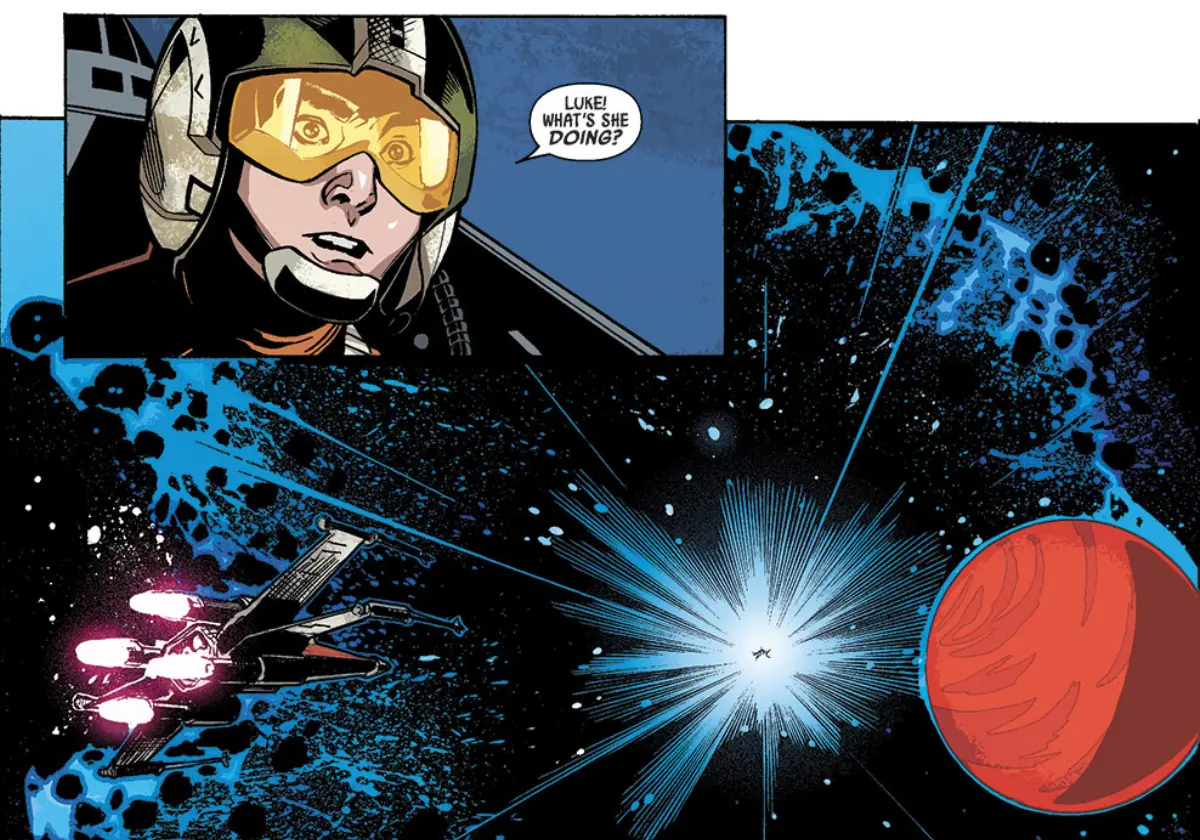
I find the premise of this book almost to be the highlight of the whole package. The bleak necessity that settles on the shoulders of Leia is such a strong representation of the weight of responsibility, particularly on those in positions of power. Additionally, the details and complexities of trying to unite disparate people based on the planet from which they originate are compelling in just the sheer enormity of the task. The questions that are inherent in the reality of the situation are interesting and almost bold for a franchise like Star Wars. What does it mean to be an Alderaanian after the planet is destroyed? Is there something above lifestyle, race, and religion that genuinely connects these distinct groups of people? Especially given that they were definitionally not present on their ostensible home planet at the time of its destruction, meaning they are more likely to have a tenuous relationship with Alderaan and its culture. To this book’s credit, it tackles these topics without too much sidestepping, but the five-issue length forces a lot of simplifications and leaves little room for exploration of more nuanced ideas.
Princess Leia sees the title character encounter and recruit various factions of Alderaanians, among whom she must also keep the peace. Moment to moment, Leia’s adventure is a classic Star Wars romp throughout the entire book. A trip to Naboo, multiple backstabs, and a run-in with local wildlife all round out the series and give it the tried-and-true space-escapade tone for which the franchise is well known. While the story is not complex, it is not shallow, and I think it successfully walks the line between being engaging for adult readers and accessible to younger fans.
There are interesting moments of depth across the wide cast of characters, with Jora's bigotry and Tula's betrayal of Tace as real highlights, but make no mistake: Leia is the center of the show. Similar to the work Kieron Gillen was doing on Darth Vader, this book recognizes the force (get it?) that its main character exerts on the world around them. Like her father, Leia is not going to be sitting on her hands for any substantial length of time, and her combination of position, abilities, and personality means anything she gets up to would have a certain level of importance and carry associated consequences. To avoid stepping on the established story, Waid has the title character go out and work far and wide, with new and interesting faces that can be used to tell stories with real consequences around the almost untouchable leading woman. Unfortunately, this book ends after five issues, so it is unclear whether any of these new players will appear again in any significant way, which is a bummer, as this felt like a series ramping up rather than a one-off arc.
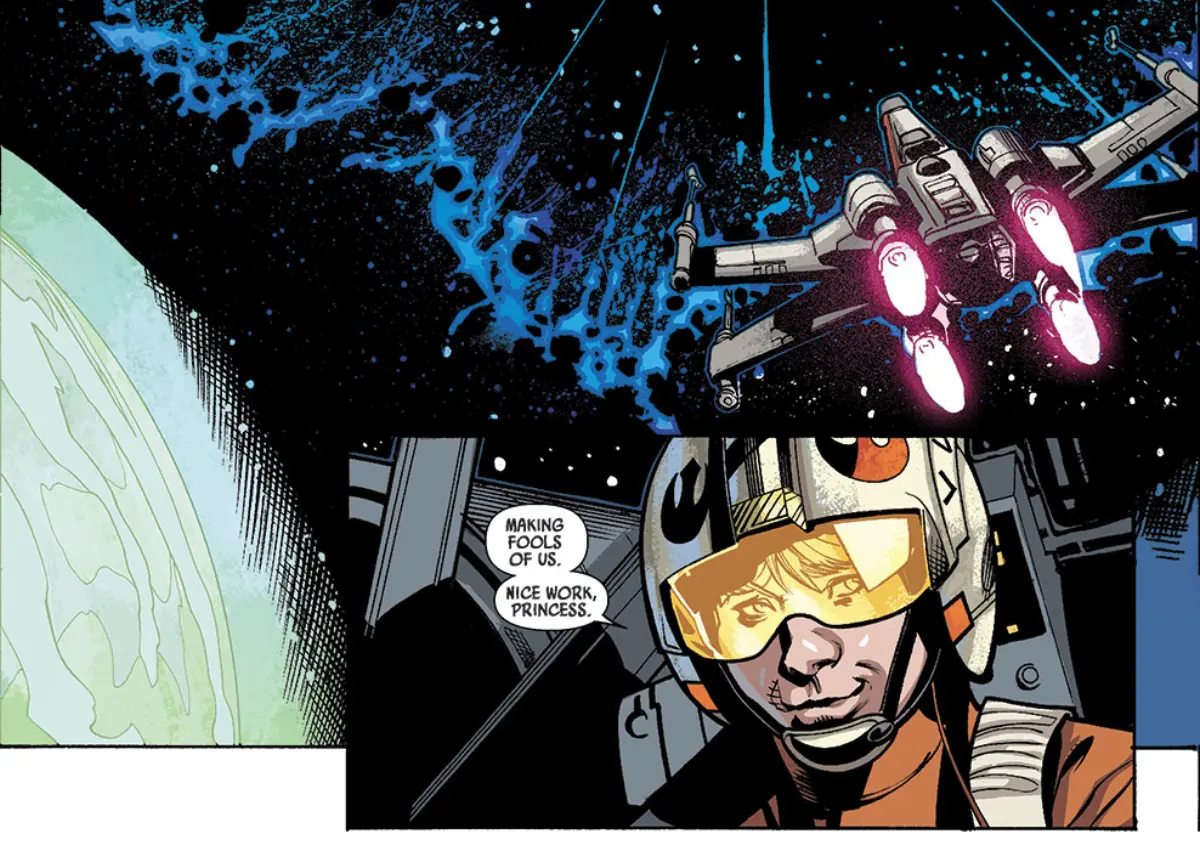
I do not know whether most of the art in this book is remarkable, but it is certainly enjoyable. The simple, colorful art direction feels aligned with the film's look and visual tone, with a slightly lighter take to fit the medium. There are some sections towards the end of the series that include lines that I would describe as almost scratchy or ill-defined. There’s no confusion about what is being portrayed, but there is a certain amount of polish present at the outset, which does not hold for the entire run.
There’s not much to complain about with Princess Leia, but, ironically, it remains hard to recommend. For someone with Marvel Unlimited and a passing interest in Star Wars, this book is a good read and worth the time. Outside that scenario, the series is mostly essential for young fans looking to get into the Star Wars universe. The light moral reasoning and simple politics are the bread and butter of the franchise, and the use of Leia is consistent enough to easily believe the character on the page is the same as the one on the screen. The worst part of Princess Leia is that it proves a framework for telling engaging stories with one of the most well-known characters in pop culture, but there is too little follow-up material that works in the same vein.
Citation Station
Princess Leia. 2015. Marvel. Mark Waid (writer), Terry Dodson (artist), Rachel Dodson (inker), Joe Caramagna (letterer), Jordie Bellaire (colorist), Jordan D. White (editor).